Steroids in Asthma: What Really Matters
Steroids are central to asthma treatment, yet they are often misunderstood. The confusion usually arises from not distinguishing between inhaled steroids and oral steroids. While both have a role in asthma care, they are not the same in dose, action, or safety profile.
Here are four important differences that every patient should understand.
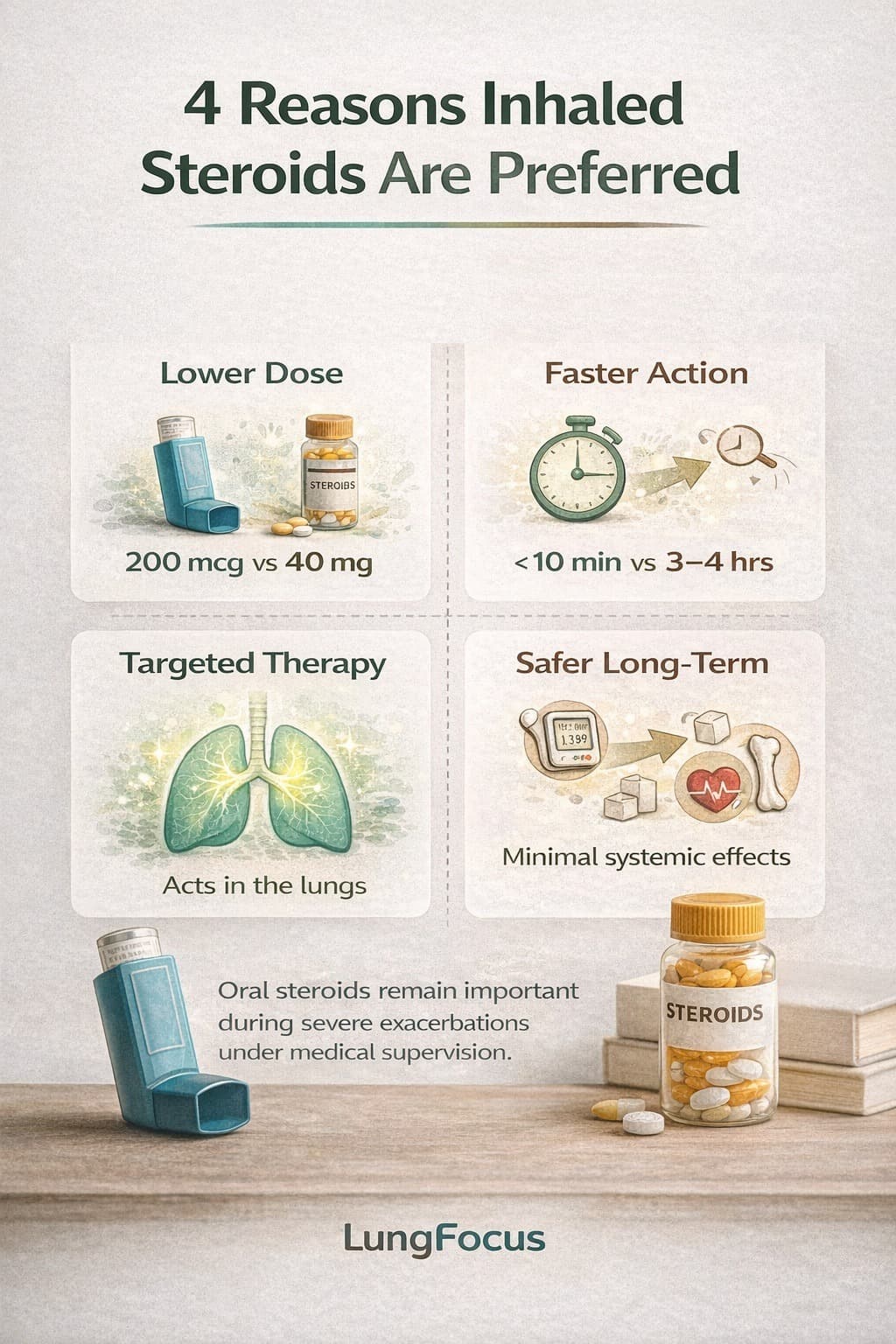
1. The Dose Is Very Different
The amount of steroid delivered through an inhaler is extremely small compared to oral tablets.
A typical inhaled steroid dose may be around 200 micrograms (mcg), whereas oral steroids are prescribed in milligram (mg) doses — often 30–40 mg during exacerbations. This difference in dosing matters. Inhaled steroids use minimal medication to achieve maximum local benefit, which is one reason they are preferred for long-term control.
2. They Work Faster
Inhaled steroids begin acting within minutes (often under 10 minutes) because they reach the lungs directly.
Oral steroids must first be absorbed into the bloodstream and then distributed through the body, which means they generally take 3–4 hours to begin working. For day-to-day asthma control, quicker onset through inhalation offers a clear advantage.
3. Targeted vs Systemic Action
Asthma is a disease of the lungs.
Inhaled steroids are delivered directly into the airways — exactly where inflammation exists. Oral steroids, on the other hand, enter the bloodstream and are distributed to multiple organs, even those that do not require treatment.
Targeted therapy allows effective control while limiting unnecessary exposure to the rest of the body.
4. Side Effects: Very Different Profiles
Inhaled steroids are generally very safe. The two side effects to be mindful of are:
- Oral ulcers — prevented by gargling after use and by using a spacer
- Change in voice (hoarseness) — uncommon and usually corrected by adjusting the formulation or technique
Long-term oral steroid use, however, may lead to more significant systemic effects such as:
- Raises blood pressure
- Increased blood sugars
- Causes bone loss (osteoporosis)
- Salt and water retention
That said, short courses of oral steroids during asthma exacerbations — when prescribed appropriately — can be life-saving. The key is proper indication, dose, and duration under medical supervision.
A Practical Reminder
Steroids, whether inhaled or oral, should always be used as prescribed. Never start, stop, or alter doses without medical advice. During worsening symptoms, consult your doctor before using steroids or antibiotics.
When used correctly, inhaled steroids remain the safest and most effective foundation for long-term asthma control.
Need Help Managing Your Asthma?
Schedule a consultation to discuss your asthma management and personalized treatment plan
Book Consultation