Asthma Triggers & Simple Precautions That Really Help
Asthma control is not just about inhalers. It also depends on identifying asthma triggers and taking simple, practical precautions at home and outdoors.
Small, consistent lifestyle changes can significantly improve asthma control and reduce flare-ups.
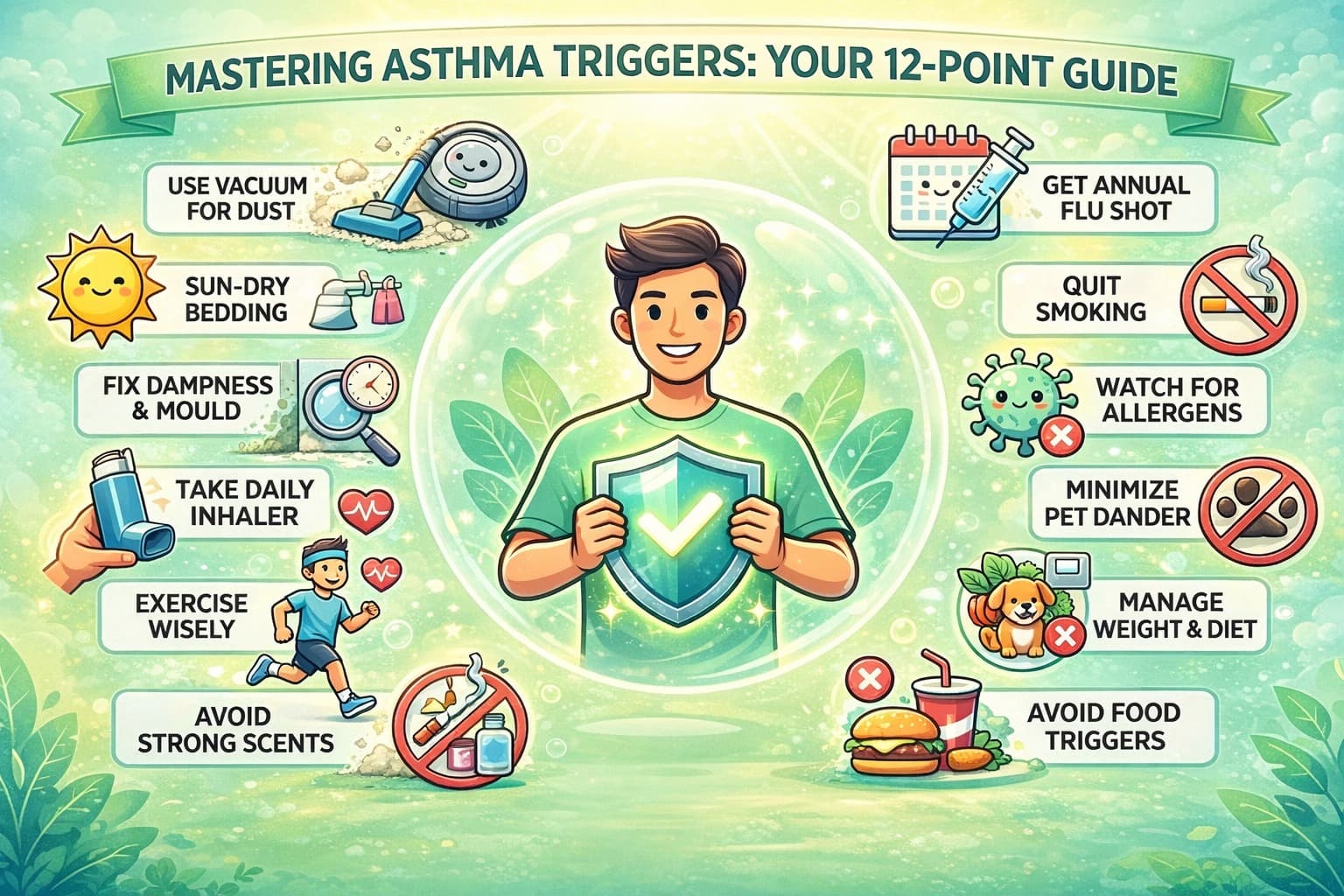
Here are 12 simple but important precautions every person with asthma should know.
1. Avoid dust exposure
Dust is one of the most common asthma triggers.
- Use a vacuum cleaner instead of brooming—brooming disturbs settled dust and spreads it into the air.
- Activities like shifting homes, cleaning cupboards, renovation, or painting are well-known asthma triggers due to increased dust exposure.
- If unavoidable, wear a mask and ensure good ventilation.
2. Sun-dry bedsheets and pillow covers twice a week
Bedsheets and pillows commonly harbour house dust mites, one of the most frequent allergens seen on allergy testing in asthma.
- The simplest and most effective way to reduce dust mites is sun-drying.
- Fix a routine—many patients find Wednesdays and Sundays easy to remember.
3. Wash or change curtains regularly
Curtains collect dust just like bedsheets.
- Wash curtains at least once a month or change them regularly to reduce allergen load and asthma symptoms.
4. Check for damp walls and mould
Humidity and dampness encourage fungal growth (such as aspergillus), a common allergen in people with asthma.
- Dampness is often seen in bathrooms with poor ventilation or rooms with false ceilings.
- Identifying and correcting damp areas is an important preventive strategy for asthma control.
5. Avoid allergens you're sensitive to
Asthma triggers may include foods, pets, medications, or environmental substances.
- Often, it is the colouring agents or preservatives rather than the food itself that cause symptoms.
- Be cautious before completely avoiding foods—observe patterns and discuss them with your doctor.
6. Avoid irritants
Even non-allergic irritants can worsen asthma symptoms, including:
- Cigarette smoke
- Incense sticks and mosquito coils
- Strong perfumes or chemical smells
- Pollen
Reducing exposure helps keep the airways calm and responsive to treatment.
7. Clean air-conditioner filters regularly
Air-conditioner filters can harbour dust and fungal spores, which can trigger asthma.
- Clean AC filters on a fixed schedule to prevent recirculation of allergens.
8. Take asthma medications daily—even when symptom-free
Many patients stop inhalers once they feel better due to fear of addiction or side effects.
- Asthma involves chronic airway inflammation, which takes 14–21 days to settle.
- Inhalers are safe for long-term use.
- Stopping inhalers early, reducing doses, or using them only "as needed" often leads to poor asthma control and repeated symptoms.
(More on inhalers in an upcoming post.)
9. Get the annual flu vaccine
Most asthma flare-ups begin with viral infections.
- The influenza vaccine is recommended yearly for people with asthma.
- It significantly reduces asthma exacerbations.
In asthma, prevention truly is better than cure.
10. Smoking and asthma don't mix
Smoking causes permanent and irreversible lung damage.
- It worsens airway inflammation.
- It reduces the effectiveness of inhaled asthma medications.
- If quitting feels difficult, seek professional help—support improves success rates.
(More on smoking cessation in future posts.)
11. Exercise—yes, but wisely
Exercise has many benefits, even for people with asthma.
- In some individuals, cold air or hyperventilation can trigger symptoms (exercise-induced asthma).
- Start slowly, increase intensity gradually.
- Use your inhaler before exercise if advised and always carry one.
- Consult your doctor if symptoms worsen during physical activity.
12. Address obesity
Recent research shows obesity is a pro-inflammatory state that can worsen asthma control.
- Regular exercise and dietary modifications help.
- Aim for a realistic and sustainable weight goal.
Better weight control often leads to better asthma control.
In summary
Asthma is a highly controllable condition when medications are used correctly and triggers are minimized.
Awareness, routine, and consistency go a long way in helping you breathe better and live more freely.
More asthma-related topics—including inhalers, lifestyle strategies, and prevention tips—coming soon on LungFocus.
Need Help Managing Your Asthma?
Schedule a consultation to discuss your asthma management and personalized treatment plan
Book Consultation